
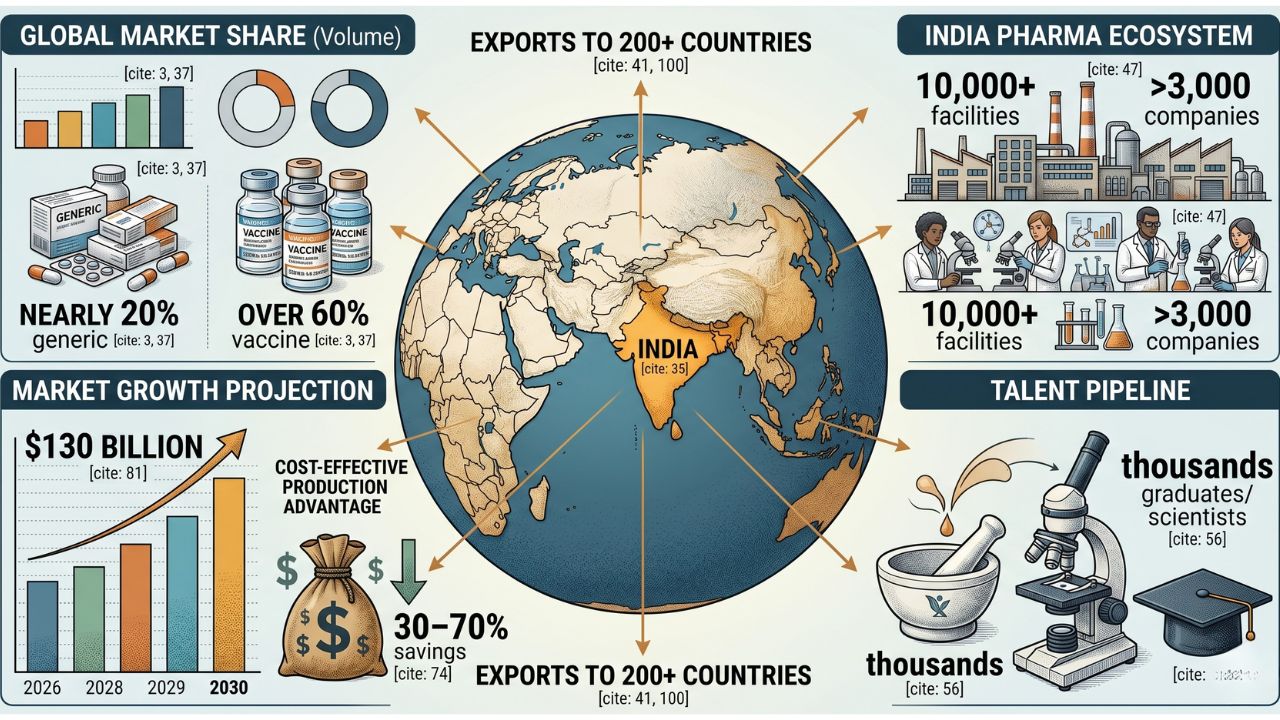
Rising healthcare needs and increasing demand for safe medicines make choosing the right pharmaceutical company more critical than ever. Many businesses and healthcare providers struggle with inconsistent quality, delayed supply, and limited innovation-issues that directly affect patient outcomes and trust. At the same time, the global pharmaceutical market continues to expand rapidly, expected to exceed $1.5 trillion by 2027, while India supplies nearly 20% of the world’s generic medicines and fulfills over 60% of global vaccine demand, according to the Indian Brand Equity Foundation and World Health Organization. These numbers highlight both the opportunity and the challenge: not every pharmaceutical company delivers the same level of reliability and innovation. A trusted pharmaceutical partner focuses on research-driven development, strict quality standards, and efficient manufacturing to ensure consistent results. This blog helps you understand what defines a reliable pharmaceutical company and how to choose one that supports long-term healthcare success.
What is a Pharmaceutical Company?
A pharmaceutical company develops, produces, and distributes medicines that improve and save lives. These companies turn scientific research into practical treatments for common and complex diseases. For example, when a patient needs antibiotics, vaccines, or chronic care medication, a pharmaceutical company ensures those products meet strict safety and quality standards before reaching the market. The global pharmaceutical industry continues to grow rapidly and is projected to cross $1.5 trillion in value, showing its massive impact on healthcare. In India, companies supply affordable generic medicines worldwide and play a major role in global health systems. A reliable pharmaceutical company focuses on innovation, consistent manufacturing, and timely distribution, helping healthcare providers deliver better patient outcomes every day.
Definition and Core Functions
A pharmaceutical company focuses on creating safe, effective, and accessible medicines through a combination of science, technology, and large-scale production. These companies drive healthcare forward by transforming research into real-world treatments. The industry invests heavily in innovation, with global R&D spending exceeding $200 billion annually, highlighting its commitment to new drug development.
Here’s how a pharmaceutical company operates at its core:
- Research & Drug Discovery
Scientists study diseases and identify compounds that can treat or manage them. For example, researchers develop antiviral drugs to control infections. - Clinical Trials & Testing
Companies test new medicines through multiple trial phases to ensure safety and effectiveness before approval. - Manufacturing & Production
They produce medicines in controlled environments, following strict quality standards to maintain consistency. - Quality Assurance & Compliance
Teams monitor every stage to meet regulatory guidelines and ensure patient safety. - Distribution & Supply Chain
Companies deliver medicines to hospitals, pharmacies, and global markets efficiently.
Each function plays a critical role in delivering reliable healthcare solutions and maintaining trust in the pharmaceutical industry.
Role in Modern Healthcare
Pharmaceutical companies play a direct and powerful role in improving global healthcare outcomes. They not only develop treatments but also ensure patients receive timely and effective medicines. From managing chronic diseases to responding to global health crises, their impact remains essential. In countries like India, pharmaceutical companies support both domestic healthcare and international supply chains.
Here’s how they contribute to modern healthcare:
| Key Area | Contribution | Example |
| Disease Treatment | Develop medicines for acute and chronic conditions | Antibiotics, diabetes drugs |
| Preventive Care | Produce vaccines and preventive solutions | Immunization programs |
| Innovation | Invest in new drug research and biotechnology | Cancer therapies |
| Accessibility | Provide affordable generic medicines | Low-cost treatments in India |
| Emergency Response | Support during pandemics and health crises | Vaccine production and supply |
Pharmaceutical companies strengthen healthcare systems by combining innovation, quality, and accessibility, ensuring better care reaches more people worldwide.
Why India is a Global Hub for Pharmaceutical Companies
India has earned a strong reputation as a global hub for every major pharmaceutical company. The country combines scale, skill, and affordability, which attracts businesses from around the world. It supplies nearly 20% of global generic medicines and meets over 60% of global vaccine demand, making it a key player in international healthcare.
Here’s why India stands out:
- Massive Production Capacity
India hosts thousands of pharma manufacturing units that support large-scale global supply. - Global Regulatory Approvals
Indian facilities hold approvals from agencies like the US FDA and WHO, ensuring international quality standards. - Strong Export Network
Pharma companies in India export medicines to over 200 countries, including highly regulated markets. - Government Support
Policies like “Make in India” encourage pharmaceutical growth and investment. - Innovation Growth
Increasing investment in R&D strengthens drug development and biotech advancements.
This combination of quality, scale, and innovation makes India a preferred destination for businesses seeking a reliable pharmaceutical company.
Strong Manufacturing Capabilities
India’s manufacturing strength gives every pharmaceutical company a powerful competitive edge. The country ranks among the top global producers of medicines, with more than 3,000 pharmaceutical companies and over 10,000 manufacturing facilities. These facilities operate under strict regulatory standards and deliver consistent, high-quality output.
Here’s how India’s manufacturing ecosystem supports global demand:
| Manufacturing Factor | Details | Example |
| Scale of Production | Large-volume production across multiple drug categories | Mass production of generic tablets |
| Regulatory Compliance | Facilities meet US FDA, WHO-GMP standards | Export-ready medicine batches |
| Advanced Infrastructure | Modern plants with automation and quality control systems | Automated packaging lines |
| Diverse Product Range | Covers generics, APIs, vaccines, and specialty drugs | Vaccine manufacturing hubs |
| Global Supply Chain | Efficient logistics for international delivery | Export to US, Europe, Africa |
Manufacturers in India don’t just produce medicines—they ensure consistency, speed, and compliance. For example, during global health crises, Indian pharmaceutical companies rapidly scaled up vaccine and drug production to meet worldwide demand.
This strong manufacturing backbone allows businesses to partner confidently with an Indian pharmaceutical company and scale operations without compromising quality.
Skilled Workforce & Research Expertise
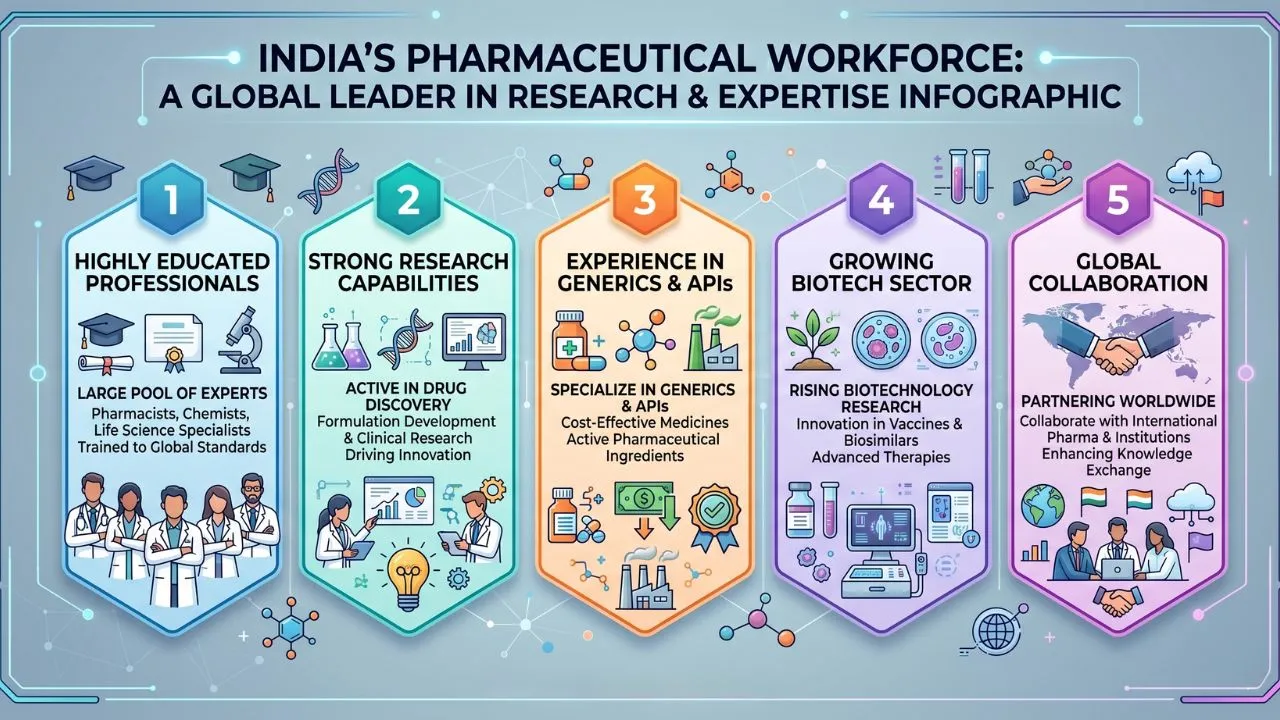
A pharmaceutical company depends heavily on talent, and India delivers a highly skilled workforce that drives innovation and efficiency. The country produces thousands of pharmacy graduates, scientists, and biotech professionals every year, creating a strong talent pipeline for the industry.
Here’s what makes India’s workforce stand out:
- Highly Educated Professionals
India has a large pool of pharmacists, chemists, and life science experts trained in global standards. - Strong Research Capabilities
Scientists actively work on drug discovery, formulation development, and clinical research. - Experience in Generics and APIs
Indian experts specialize in developing cost-effective generic medicines and active pharmaceutical ingredients. - Growing Biotech Sector
The rise of biotechnology research supports innovation in vaccines, biosimilars, and advanced therapies. - Global Collaboration
Indian researchers collaborate with international pharma companies and institutions, enhancing knowledge exchange.
For example, Indian research teams played a crucial role in developing and scaling vaccines during global health emergencies. Their expertise helped accelerate production timelines and improve accessibility.
This combination of knowledge, experience, and innovation makes India an ideal location for any pharmaceutical company looking to invest in research-driven growth.
Cost-Effective Production Advantage
One of the biggest reasons companies choose India is its unmatched cost efficiency. A pharmaceutical company in India can produce high-quality medicines at significantly lower costs compared to Western countries, without compromising standards.
This advantage comes from multiple factors:
- Lower Operational Costs
Labor, infrastructure, and operational expenses remain more affordable compared to developed markets. - Efficient Manufacturing Processes
Companies use optimized production techniques to reduce waste and increase output. - Bulk Production Capability
Large-scale manufacturing lowers per-unit cost, making medicines more affordable. - Strong Generic Market
India leads in generic drug production, offering cost-effective alternatives to branded medicines.
For example, a generic medicine manufactured in India often costs 30–70% less than its counterpart in the US or Europe. This affordability allows healthcare providers to deliver treatments to a larger population.
Pharmaceutical companies also benefit from reduced investment risks while maintaining high-quality output. This balance of cost and quality makes India a strategic choice for businesses seeking long-term growth in the pharmaceutical sector.
Pharmaceutical Industry Trends in India (2026)
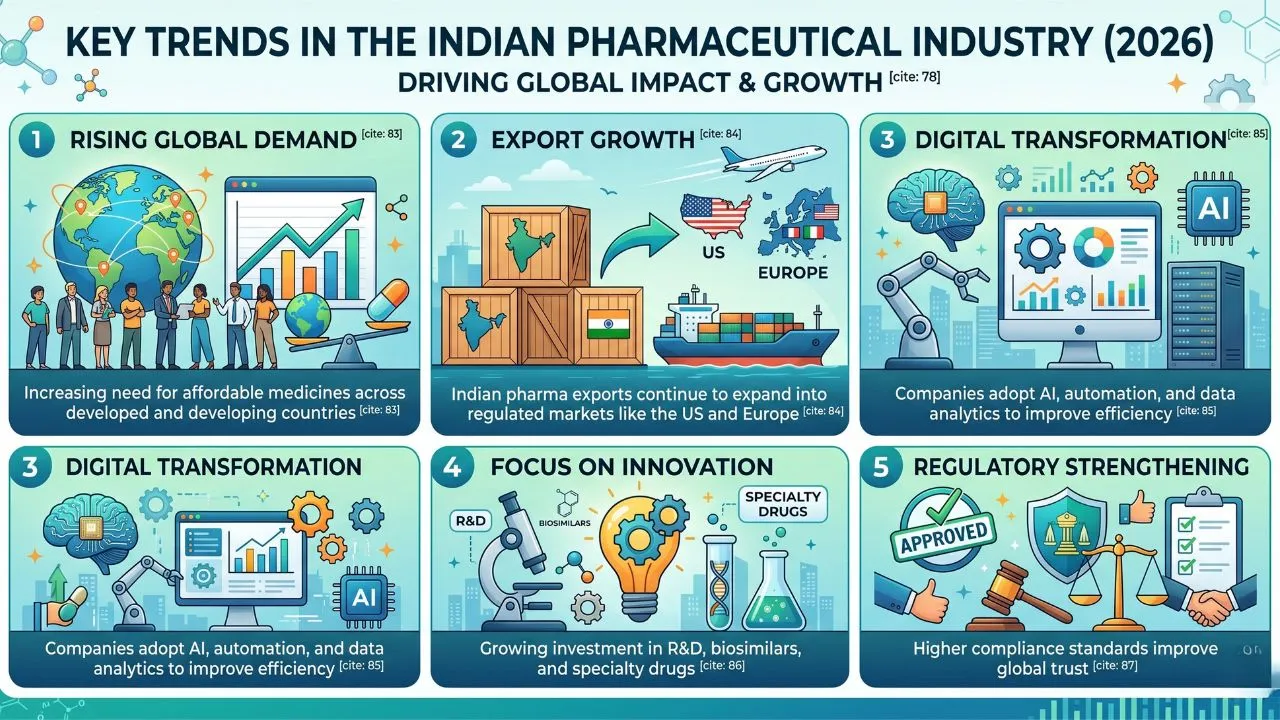
The pharmaceutical industry in India continues to evolve rapidl2026y in , driven by demand, innovation, and global expansion. Every forward-looking pharmaceutical company now adapts to new technologies and market shifts to stay competitive. India’s pharma market is projected to reach $130 billion by 2030, showing strong long-term growth.
Key trends shaping the industry:
- Rising Global Demand
Increasing need for affordable medicines across developed and developing countries - Export Growth
Indian pharma exports continue to expand into regulated markets like the US and Europe - Digital Transformation
Companies adopt AI, automation, and data analytics to improve efficiency - Focus on Innovation
Growing investment in R&D, biosimilars, and specialty drugs - Regulatory Strengthening
Higher compliance standards improve global trust
These trends create strong opportunities for any pharmaceutical company aiming to scale globally.
Growing Global Demand
Global demand for medicines continues to rise, creating massive opportunities for every pharmaceutical company in India. Factors like aging populations, chronic diseases, and increased healthcare awareness drive this growth. The global pharmaceutical market already exceeds $1.4 trillion, and demand keeps increasing each year.
Here’s how demand is expanding across key areas:
| Demand Driver | Impact on Pharma Industry | Example |
| Aging Population | Higher need for long-term medications | Diabetes, heart disease treatments |
| Chronic Diseases | Continuous demand for daily medicines | Hypertension drugs |
| Global Health Awareness | Increased preventive care usage | Vitamins, vaccines |
| Pandemic Preparedness | Faster vaccine and drug development | COVID-19 vaccine production |
| Emerging Markets | Rising access to healthcare | Affordable generics in Africa |
Indian pharmaceutical companies meet this demand by producing high-quality, cost-effective medicines at scale. For example, India supplies a large share of global vaccines and generic drugs, ensuring millions of patients receive essential treatments.
This growing demand encourages companies to expand production, invest in research, and strengthen global partnerships.
Export Opportunities
Export growth remains one of the biggest strengths of any pharmaceutical company operating in India. Indian pharma companies export medicines to over 200 countries, including highly regulated markets like the United States and Europe.
Key export advantages include:
- Strong Global Presence
Indian pharma products reach markets across North America, Africa, Asia, and Europe - Regulatory Approvals
Many Indian facilities hold approvals from US FDA, WHO-GMP, and EU authorities - Leadership in Generics
India ranks among the top suppliers of generic medicines worldwide - High Demand for Vaccines
Indian companies supply a major portion of global vaccine requirements - Government Support
Export incentives and policies boost international trade
For example, Indian pharmaceutical companies play a key role in supplying affordable HIV medicines to African nations. They also export large volumes of generic drugs to the US, helping reduce healthcare costs.
These export opportunities allow pharmaceutical companies to scale globally while maintaining strong revenue growth.
Digital Transformation in Pharma
Digital transformation is reshaping how every pharmaceutical company operates in 2026. Companies now use advanced technologies to improve speed, accuracy, and decision-making across the entire value chain.
Here’s how digital adoption drives change:
- Artificial Intelligence (AI)
Companies use AI to accelerate drug discovery and predict outcomes faster. For example, AI helps identify potential drug compounds in weeks instead of years. - Automation in Manufacturing
Automated production lines improve consistency and reduce human error in medicine production. - Data Analytics
Pharma companies analyze large datasets to optimize clinical trials and improve treatment effectiveness. - Supply Chain Digitization
Real-time tracking ensures timely delivery and reduces delays in global distribution. - Telemedicine Integration
Digital platforms connect pharma companies with healthcare providers and patients directly.
For example, many Indian pharmaceutical companies now use AI-based systems to monitor production quality and detect issues instantly. This shift not only improves efficiency but also enhances patient safety.
Digital transformation helps pharmaceutical companies stay competitive, reduce costs, and deliver better healthcare solutions faster.
Conclusion
A reliable pharmaceutical company does more than manufacture medicines-it drives innovation, ensures safety, and strengthens global healthcare systems. From advanced research and high-quality production to global distribution, the right partner helps businesses and healthcare providers deliver consistent, effective solutions. With India leading the industry through cost efficiency, skilled expertise, and strong manufacturing capabilities, companies now have access to world-class pharmaceutical support.
Choosing the right pharmaceutical company directly impacts product quality, patient trust, and long-term growth. A research-driven, quality-focused approach ensures better outcomes and sustainable success in a competitive market.
If you’re looking to partner with a trusted pharmaceutical company that prioritizes innovation, quality, and reliability, now is the time to take the next step. Connect with New Medicon Pharma today to explore how advanced solutions can support your healthcare and business goals.
Frequently Asked Questions
What does a pharmaceutical company do?
A pharmaceutical company makes medicines. It researches diseases, develops drugs, produces them in factories, and supplies them to hospitals and pharmacies.
Why is India famous for pharmaceutical companies?
India is known for low-cost medicine production, high quality standards, and strong exports. Indian companies supply affordable medicines to many countries worldwide.
How to choose a reliable pharmaceutical company?
Choose a company with proper certifications, good experience, and strong quality control. Check their reputation and ability to deliver safe and consistent products.
What services do pharmaceutical companies offer?
Pharmaceutical companies offer:
- Medicine research
- Drug development
- Manufacturing
- Contract manufacturing
- Quality testing
- Distribution
What is contract manufacturing in pharma?
Contract manufacturing means one company makes medicines for another company. It helps businesses save cost and produce medicines easily without setting up their own factory.